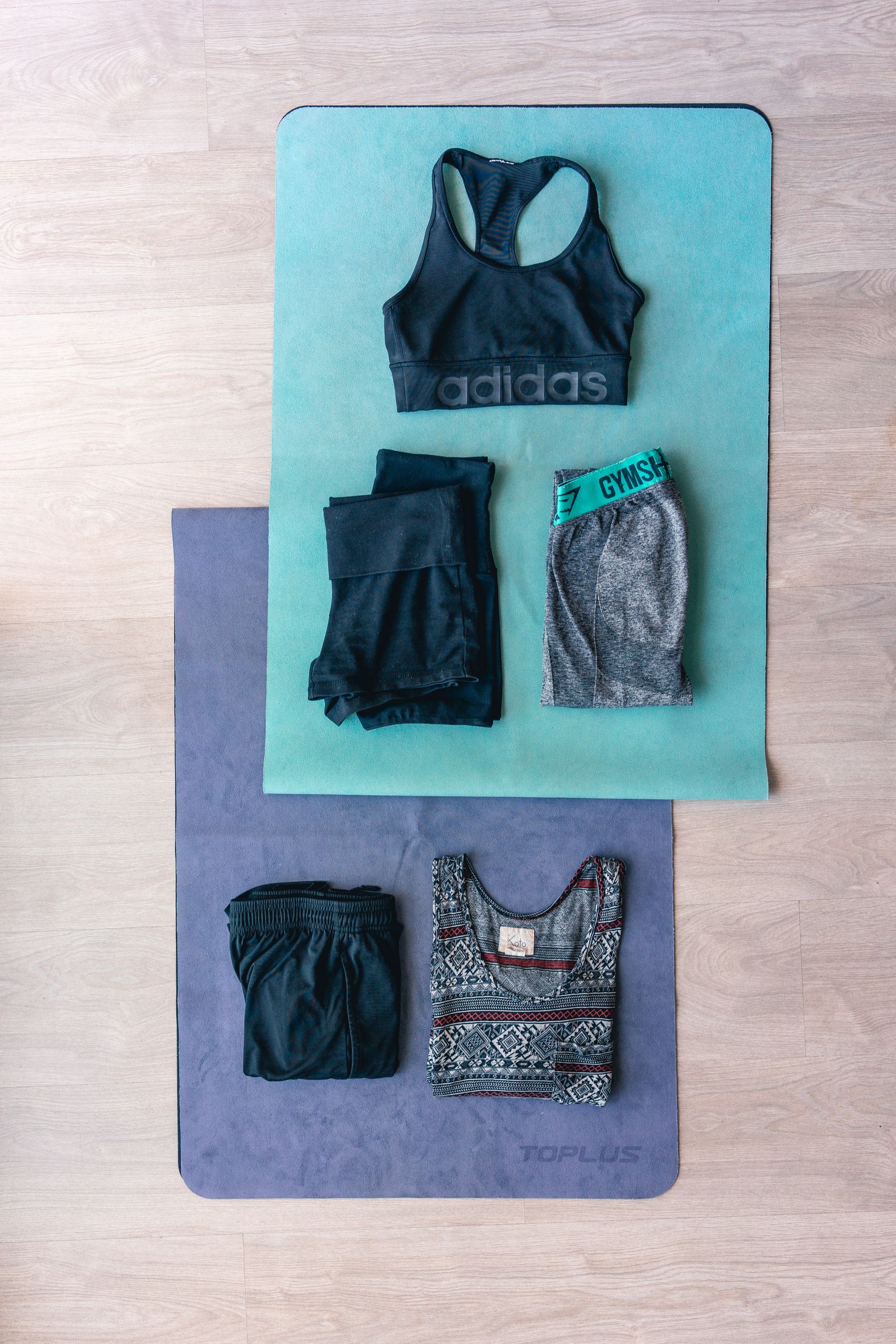
Training apparel is judged in the middle of a session: does the shirt cling, do the leggings slide, does the bra do its job. The right answers come from fabric and construction, not from logos.
This guide explains the fabric properties that matter, the role of each piece, and how to assemble a small, hard-working rotation from brands in the Fitnos catalog including Nike, Under Armour, Adidas, CRZ YOGA, The Gym People, Fabletics, and Gymreapers.
Fabric properties that matter
- Moisture management: synthetic blends move sweat away and dry fast; cotton absorbs and stays wet.
- Stretch and recovery: elastane content lets fabric move and return to shape.
- Weight and breathability: lighter for hot cardio, heavier for cold-weather layers.
- Opacity under stretch: relevant for leggings — check product descriptions and brand notes.
- Durability: flatlock seams and quality waistbands survive frequent washing.
Piece by piece
Tops and tanks
Light synthetic tees and tanks for most sessions; a looser cut for lifting, a closer cut for running to reduce chafe. Long sleeves for cool gyms and outdoor mornings.
Leggings and biker shorts
High-waisted, squat-proof leggings are the default for lifting and classes. Biker shorts offer the same compression with more airflow. Check rise, inseam, and pocket details on each listing.
Sports bras
Support levels are described as low, medium, or high. Match support to impact — running and jumping need more than yoga or lifting. Fit is individual; brand size guides on each listing are the starting point.
Layers
A quarter-zip or hoodie for warm-ups and the walk to the gym. Fleece for cold, lightweight woven for mild. Layers do not need to be technical — they need to come off easily.
A small rotation
- Three to four synthetic tops.
- Two pairs of shorts or leggings matched to your main session type.
- Two sports bras if applicable, one high-support.
- One warm layer.
- Socks that fit your shoes — often overlooked.
Mistakes to avoid
- Buying cotton for sweaty sessions.
- Choosing leggings without checking opacity notes.
- Owning ten tops and no proper warm layer.
- Ignoring socks and chafing until they ruin a long session.
Pick two or three leggings and compare listed details, price, and retailer in one view.
Frequently asked questions
- Is expensive workout apparel worth it?
- Construction and fabric quality matter more than price. Compare fabric content, seams, and reviews of fit on each listing rather than brand alone.
- How many sets of gym clothes do I need?
- Enough to train between laundry days — typically three to four tops and two to three bottoms for a regular schedule.